Why marketing has become too complex for SMEs
Associated Flowdake use case: SMEs & lean marketing teams
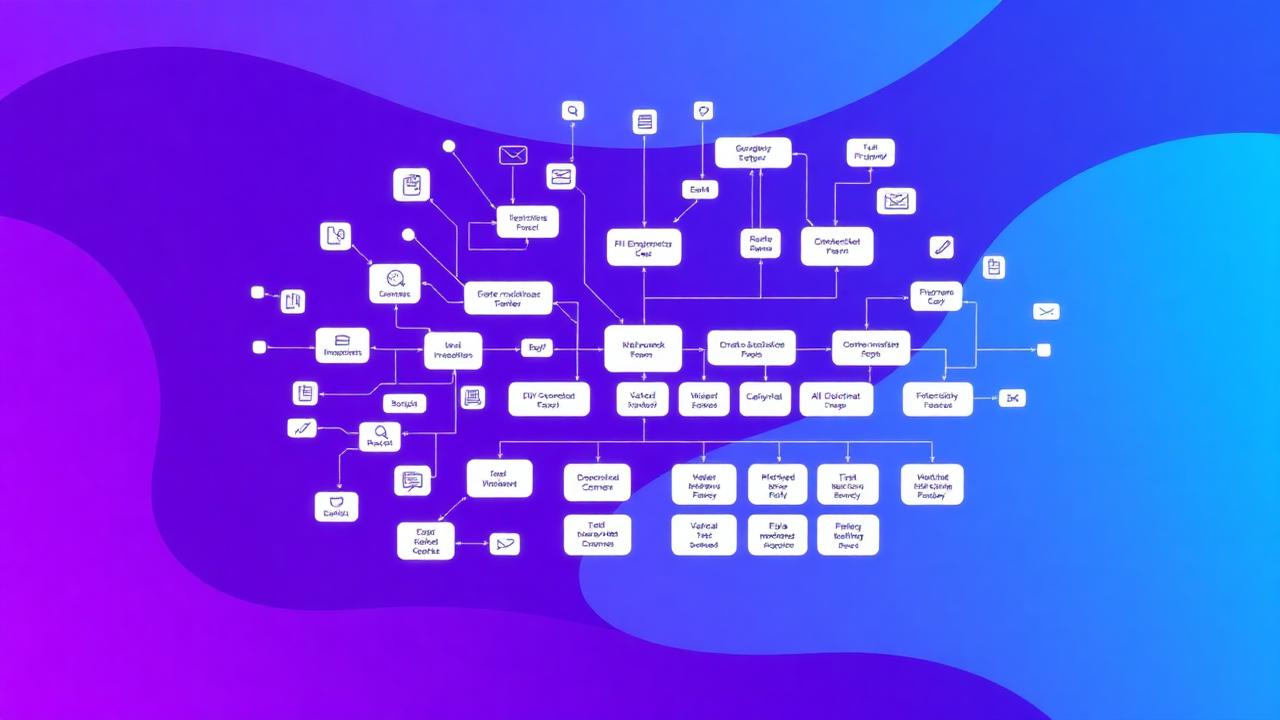
For a long time, marketing relied on a few simple principles: understand your market, communicate clearly, be visible in the right place. Today, for an SME, marketing has become a pile of complex decisions. Tools, channels, formats, data, experts... Every action seems to require specialization.
The multiplication of channels changed everything
Social media, search, advertising, content, video, local, automation... Each channel promises results, if you know how to use it correctly.
The problem isn't the existence of these channels. It's their accumulation without structure.
For an SME, this means: too many tools to master, too many decisions to make, not enough time to step back.
According to HubSpot, SMEs use an average of 12 different tools for their marketing.
Marketing has become an organizational problem
Marketing complexity isn't just technical. It's primarily organizational.
When no one is truly responsible: actions are sporadic, messages inconsistent, results hard to analyze.
According to Gartner, marketing budgets decreased by 15% in 2024, forcing teams to do better with less.
Marketing then turns into a string of isolated, energy-draining initiatives rather than a structured growth lever.
The false solution: adding even more expertise
Facing this complexity, the classic response is to add: an agency, a consultant, a new software.
But without a clear framework, these additions often amplify the problem.
The real question isn't: 'Which tool or expert to choose?' But rather: 'What marketing system do we want to put in place?'
The real question is: "What execution system do we want to put in place?"
Back to basics: clarity and coherence
SMEs that succeed don't do everything. They do the right things, in the right order.
They start by: clarifying their objective, structuring their message, choosing a few priority channels, measuring what really matters.
• Clarify the objective (Awareness? Lead gen? Retention?).
• Craft a strong message (your unique expertise).
• Prioritize the channels where your audience actually is.
• Lean on an execution copilot.
This is where technology should act as a simplifier, not a source of added complexity. The future of marketing for small businesses lies in systems that can absorb this complexity and surface only clear, ready-to-use actions.